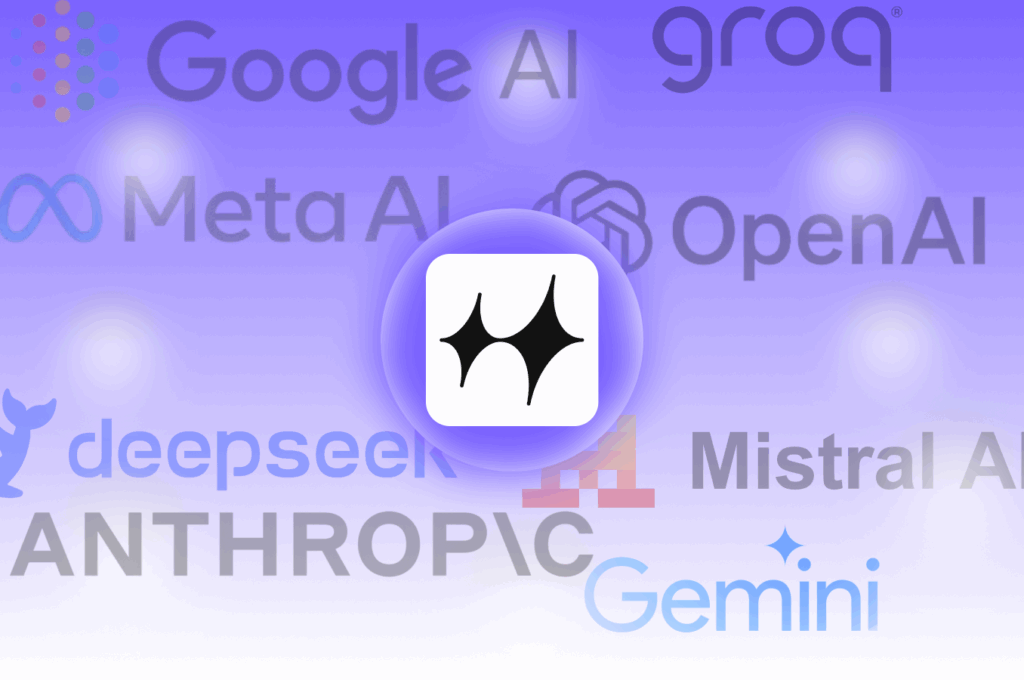
The Gemini 3 Era is Here: Why Your AI Strategy Needs Agnosticism, Not Allegiance

The AI landscape just shifted beneath our feet—again. With the release of Gemini 3, Google has arguably reset the benchmark for what we expect from Large Language Models (LLMs). Its advancements in multimodal reasoning, massive context windows, and „deep thinking“ capabilities are turning heads and topping leaderboards.

Robin Müller • Hainzelman
20.11.2025 • 

Inhaltsverzeichnis

Zusammenfassung der Artikelthemen

For many businesses, the knee-jerk reaction is to go „all in.“ To rewrite code, migrate data, and hard-wire their systems to this new champion.

But this is a trap.

While Gemini 3 is the flavor of the month, locking your enterprise into a single AI provider is a strategic liability. At Hainzelman, we believe the only sustainable AI strategy is one that remains vendor-agnostic. Here is why you must resist the urge to commit to a monoculture, and how the Hainzelman Platform ensures you can use the best tools today without regretting it tomorrow.

The „Shiny Object“ Cycle and the Vendor Lock-In Trap

We have seen this movie before. First, it was GPT-4. Then Claude 3.5. Now Gemini 3. The cycle of innovation is moving faster than any corporate IT department can restructure.

Companies that build „island solutions“ or rely entirely on the ecosystem of a single tech giant face a critical dilemma: Vendor Lock-In. When you are tied to proprietary APIs and rigid hosting models, you lose the freedom to choose. You become vulnerable to price hikes, data policy changes, and the inevitable moment when your chosen model is no longer the market leader.

If you lock yourself into a single provider today to access Gemini 3, what happens when a competitor releases a model next year that is faster, cheaper, or better suited to your niche? In a rigid system, switching costs are prohibitive.

The Hainzelman Solution: AI with Attitude (and Agnosticism)

We designed the Hainzelman Platform specifically to solve this problem. We reject the choice between fragmented self-built solutions and rigid big-tech bundles. Instead, we offer a unique hybrid approach: ready-to-use AI applications backed by a fully modular architecture.

Here is how Hainzelman lets you leverage advancements like Gemini 3 without selling your soul to a single vendor:

1. We Are Truly Model-Agnostic

The Hainzelman system is designed to be model-agnostic from the ground up. Our architecture allows you to connect with:

  • Major proprietary models from providers like Google (Gemini), OpenAI, or Anthropic.
  • Private cloud models hosted on your infrastructure or ours.
  • Locally hosted models running completely on-premise.

This means you can plug in Gemini 3 today to take advantage of its superior reasoning for your complex workflows. But if you have highly sensitive data that shouldn’t leave your building, you can simultaneously route those tasks to a local, open-source model like Llama. You mix and match based on your needs, not the vendor’s restrictions.

2. The HainzelStack: Architecture that Future-Proofs Your Business

Underneath our user-friendly apps lies the HainzelStack—our open, modular framework. This stack separates the „brains“ (the LLM) from the „body“ (the workflow and application logic).

Because the components are modular, key elements like LLMs or vector databases can be swapped out to adapt to new technologies without rebuilding your entire system. If Gemini 3 is the best tool for the job today, use it. If a better tool emerges next year, the HainzelStack allows you to switch the engine while keeping the car.

3. Digital Sovereignty and a Commitment to Openness

In the rush to adopt the latest US-based models, many European companies accidentally compromise their data sovereignty. With Hainzelman, you retain full control, operating in European data centers or fully On-Premise.

But true independence goes beyond where your data is stored—it is about the code itself. We believe so strongly in preventing lock-in that we are aiming to open-source components of our architecture to foster a collaborative ecosystem among European companies. By relying on open standards and transparent protocols, we are building a platform that belongs to the community as much as it belongs to us, ensuring you are never trapped in a „walled garden“.

Conclusion: Don’t Bet the Farm on One Horse

Gemini 3 is an exciting advancement, and you should use it. But you shouldn’t be owned by it.

The Hainzelman Platform gives you the best of both worlds: the immediate power of the world’s latest AI models and the long-term security of an open, flexible architecture.

We make AI work for you—not the other way around.

Key-Takeaways

Executive summary for quick readers

AI is too strategic to outsource your future to one closed system. Lock-in slows innovation, raises costs, and is increasingly at odds with EU regulations and governance best practices.

The smarter path: design for openness from day one. With Hainzelman, you can adopt AI quickly, scale safely, and always keep control of your data, your workflows, and your future.

.

Contact

Discover what AI can do for you.

Collin MüllerManaging Director
© 2025 Hainzelman GmbH

KI in Vertrieb und Ausschreibungen

Im Detail: Was Sie lernen:

Ausschreibungen analysieren: Schnelle Erfassung von Anforderungen, Rahmenbedingungen und kritischen Punkten mit KI-Unterstützung.

Ressourcen optimal nutzen: Intelligente Suche in bestehenden Angeboten, Projekten und Referenzen für die passgenaue Wiederverwendung.

Angebote strukturieren: KI-gestützte Entwicklung überzeugender Argumentationsketten und USP-Herausarbeitung.

Qualität sichern: Systematische Prüfung auf Vollständigkeit, Konsistenz und Erfüllung der Anforderungen.

Prozesse optimieren: Aufbau eines effizienten, KI-gestützten Workflows von der Ausschreibung bis zur finalen Angebotsabgabe. 

KI in der Qualitätssicherung

Im Detail: Was Sie lernen:

Dokumentenmanagement optimieren: Wie KI bei der Analyse, Klassifizierung und Aktualisierung von QM-Dokumentation unterstützt
.
Prozessanalyse automatisieren: Einsatz von KI zur Identifikation von Prozessschwächen und Verbesserungspotenzialen.

Audit-Vorbereitung beschleunigen: Intelligente Tools für Gap-Analysen, Dokumentenprüfung und Maßnahmen-Tracking.

Compliance sicherstellen: Kontinuierliche Überwachung von Standards und automatische Erkennung von Abweichungen.

Change Management unterstützen: KI-gestützte Analyse von Änderungen und deren Auswirkungen auf das QM-System. 

Rechtssichere KI-Nutzung

Im Detail: Was Sie lernen:

Regulierung verstehen: Der EU AI Act und seine praktischen Auswirkungen auf KI-Projekte – von der Entwicklung bis zum Betrieb.

Anforderungen umsetzen: Wie Sie die rechtlichen Vorgaben in konkrete Maßnahmen übersetzen – Dokumentation, Testing, Monitoring.

Datenschutz gestalten: DSGVO-konforme Nutzung von KI-Systemen, von der Datenverarbeitung bis zum Modell-Training.

Governance etablieren: Aufbau praktikabler Prozesse für die kontinuierliche Überwachung und Verbesserung Ihrer KI-Systeme. 

KI-Projekte erfolgreich umsetzen

Im Detail: Was Sie lernen:

Die richtigen Projekte finden: Systematische Bewertung von KI-Potenzialen – welche Use Cases sind reif für KI und welche (noch) nicht?

Besonderheiten verstehen: Die wichtigsten Unterschiede zu klassischen IT-Projekten – von der Datenstrategie bis zum Qualitätsmanagement.

Risiken managen: Umgang mit den spezifischen Herausforderungen von KI – Datenqualität, Modell-Drift, Erklärbarkeit und Kontrolle.

PM-Tools neu denken: Wie KI klassische Projektmanagement-Methoden verändert – von der Planung bis zum Reporting.

Erfolg messen: Wie Sie realistische KPIs definieren und den Projekterfolg trotz KI-typischer Unsicherheiten bewerten. 

KI verstehen

Im Detail: Was Sie erwartet:

Faszination KI: Die erstaunlichen Prinzipien hinter modernen KI-Systemen – und warum sie jetzt diese Durchbrüche erzielen.

Revolution der Arbeit: Wie KI bereits heute Branchen umkrempelt und was das für die Zukunft bedeutet.

Blick in die Zukunft: Die spannendsten Entwicklungen der KI-Technologie und ihre wahrscheinlichen Auswirkungen auf unsere Arbeitswelt.

Die große Perspektive: Chancen und Herausforderungen einer Technologie, die unsere Gesellschaft grundlegend verändert. 

KI-gestütztes Marketing

Im Detail: Was Sie lernen:

Marketing mit KI verstehen: Grundlegende Konzepte und strategische Möglichkeiten – was die Systeme können und wie sie Ihre Arbeit verändern.

Strategische Planung: Von der Zielgruppen-Analyse über Themenrecherche bis zur Content-Strategie – wie KI Ihre Entscheidungen unterstützt.

Content-Konzeption: Entwicklung von Content-Plänen und Formatstrategien mit KI-Unterstützung. Systematische Ansätze für verschiedene Kanäle.

Effektive Umsetzung: Prinzipien für hochwertige KI-gestützte Texte und Visuals. Fokus auf Qualität, Markenstimme und Zielgruppenansprache.

Workflows etablieren: Praktische Arbeitsabläufe, die Strategie und Umsetzung verbinden. Integration in bestehende Marketing-Prozesse.

Qualität und Kontrolle: Standards für die Zusammenarbeit mit KI. Von der Qualitätssicherung bis zur rechtssicheren Nutzung. 

KI-Systeme entwickeln

Im Detail: Was Sie lernen:

Architektur verstehen: Einblick in den Aufbau moderner KI-Systeme – von einzelnen Modellen bis zu komplexen Anwendungen.

Integration meistern: Verschiedene Integrationsansätze für KI-Dienste, ihre Vorund Nachteile, typische Architekturmuster.

Praxiswissen KI-APIs: Implementierung, Optimierung und effiziente Nutzung verschiedener KI-Dienste. Mit Fokus auf Kosten, Performance und Zuverlässigkeit.

Eigene Datenkontexte: Techniken zur Integration von Unternehmensdaten in KI-Workflows – von Embeddings bis zu Vektordatenbanken.

Qualität sichern: Methoden für Testing, Monitoring und Evaluation von KI-Komponenten.

Production-Ready: Best Practices für Sicherheit, Skalierung und Wartbarkeit von KI-Systemen. 

KI-Strategie für Entscheider

Im Detail: Was Sie lernen:

KI im Unternehmenskontext: Ein klares Bild der Technologie, ihrer Möglichkeiten und Grenzen für Ihr Unternehmen.

Entscheidungsgrundlagen: Die wichtigsten Kriterien für Make-or-Buy, Technologieauswahl und Projektpriorisierung.

Anbieter und Lösungen: Überblick über den KI-Markt und seine Akteure – was gibt es, was passt, was kostet es?

Kompetenzen aufbauen: Welche Fähigkeiten braucht Ihr Unternehmen und wie entwickeln Sie diese systematisch?

Change Management: So führen Sie KI-Projekte erfolgreich ein und nehmen Ihre Mitarbeiter mit.

Risiken managen: Rechtliche und organisatorische Aspekte, die Sie von Anfang an beachten sollten. 

KI professionell nutzen

Im Detail: Was Sie lernen:

Grundlagen, die Durchblick schaffen: Verstehen Sie, wie moderne KI-Assistenten denken und arbeiten – und nutzen Sie dieses Wissen für bessere Ergebnisse.
Professionelles Prompting: Klare Anweisungen, die zu verlässlichen Ergebnissen führen. Mit praktischen Vorlagen für Ihren Arbeitsalltag.

Qualität sichern: Wie Sie die Ausgaben prüfen und typische Fallstricke elegant umgehen.
Workflows optimieren: Entwickeln Sie standardisierte Abläufe für wiederkehrende Aufgaben.
Best Practices & Standards: Lernen Sie bewährte Unternehmensstandards für den produktiven und rechtssicheren KI-Einsatz kennen.

Ihre Toolbox: Eine kuratierte Sammlung von Techniken und Vorlagen für Ihre tägliche Arbeit.

Making knowledge usable

Your AI turns dusty mountains of documents into living knowledge. Employees simply ask for guidelines, processes or project details - AI finds and explains the relevant information from all your documents. Like an omniscient colleague who never goes on vacation.

Reports & evaluations

Data mountains become clear recommendations for action. AI evaluates your business data, creates management reports and identifies trends. Instead of rummaging through Excel, you can make well-founded decisions based on current analyses.

Helpdesk & Support

With the workflow engine, Hainzelman automates recurring support processes such as ticket routing, prioritisation and escalation, enabling requests to be processed more quickly.

The Expert Companion preserves the knowledge of experienced support staff and makes it available at any time as a digital colleague – ideal for first-level support and training new team members.
The Assistant (chat) provides customers and internal teams with immediate, accurate answers to frequently asked questions, while the Knowledge Explorer and Research Agent Team search through complex documentation or knowledge bases and present the information in an understandable way.

Distribution

Your AI sales assistants qualify leads, send personalized follow-ups and remind customers of expiring offers. They analyze customer histories and suggest next-best-actions. Your sales become more systematic and successful.

HR & Recruiting

AI searches applications according to your criteria, conducts initial interviews via chat, coordinates interview appointments and creates candidate profiles. Your HR team makes better decisions faster - and never misses out on top talent in the application mountain again.

Quotation processing

Your AI assistants analyze incoming requests, check feasibility, create cost calculations and prepare draft offers. What used to take hours, AI does in minutes - around the clock. Your sales staff can concentrate on the essentials: personal customer contact.